Crown thinning in Blackfriars
If you are looking for crown thinning in Blackfriars, you are probably trying to solve a very practical problem: a tree that has become too dense, too shaded, too wind-catching, or simply too bulky for its surroundings. In a place like Blackfriars, where taller buildings, narrow access routes, rooflines, courtyard spaces, and busy pedestrian areas all sit close together, well-planned tree care matters. Crown thinning is one of the most useful ways to manage a tree without stripping away its shape or natural character.
Whether you own a small residential garden, manage a shared courtyard, look after a commercial property, or are responsible for trees near offices, flats, or streets around Blackfriars, thinning the crown can help improve light, reduce wind resistance, and keep the tree healthier over time. Done properly, it is a selective pruning method that removes chosen branches throughout the crown, rather than cutting the tree back harshly. The result is usually a more balanced structure, better airflow, and a lighter canopy that still looks natural.
Local customers often ask for this service when they notice their tree is blocking too much daylight, dropping heavy shade over windows, or swaying uncomfortably in exposed weather. In a dense central London location, those issues can affect not only comfort but also safety, neighbour relations, building maintenance, and the day-to-day use of outdoor space. A skilled local team can assess the tree, explain the options, and carry out work that suits both the tree and the site.
Why crown thinning suits Blackfriars properties
Blackfriars has a mix of modern developments, converted buildings, riverside properties, office spaces, and residential blocks, many of which sit in tight urban plots. Trees in these settings often need careful management because there is less room for a large, dense canopy to sit comfortably. Crown thinning is especially helpful where a full crown is causing excessive shade, where branches are pressing too close to structures, or where airflow through the canopy has become restricted.
Unlike heavy reduction work, crown thinning focuses on selective removal. That means the tree keeps its overall size and outline, but the interior becomes less congested. For many Blackfriars customers, this is the preferred outcome because it preserves the look of the tree while making it better suited to the location. It can also be a useful choice for trees near shared boundaries, terraces, roof gardens, courtyards, and paved areas where leaf drop, dampness, or poor light can become everyday frustrations.
In practical terms, thinning can make a tree feel less domineering without making it look drastically altered. That matters in areas where planning considerations, neighbour expectations, or property appearance are all part of the decision. A careful approach also helps reduce the chance of awkward regrowth or an unbalanced canopy later on.
What crown thinning actually involves
Crown thinning is the selective removal of smaller branches from throughout the crown, usually aiming to improve light penetration and air movement while keeping the tree’s shape intact. The aim is not to create a sparse or “lollipopped” look, but to ease congestion within the canopy. A professional tree surgeon will look for crossing branches, deadwood, weakly attached shoots, congested inner growth, and areas that are too dense for the tree’s own structure.
Because it is selective, the work should be planned carefully. Good thinning keeps the natural balance of the crown and avoids taking too much from any one side. In a city environment such as Blackfriars, this is especially important because trees may already be coping with limited rooting space, reflected heat, air pollution, and the constraints of nearby buildings or underground services.
The amount of thinning required depends on the species, age, current condition, and purpose of the tree. A young ornamental tree in a courtyard will not be treated the same way as a mature plane, lime, cherry, or maple in a larger frontage space. The right approach is always tailored to the tree and to the site.
Benefits of crown thinning for homeowners and businesses
There are several reasons why people choose crown thinning in Blackfriars, and many of them are tied to the realities of urban living. Light is one of the biggest benefits. If a tree has become dense enough to darken rooms, patios, or shared garden areas, thinning can allow more daylight through without removing the tree altogether. That can make a noticeable difference to comfort and usability.
Air movement is another major advantage. A dense canopy can trap moisture, encourage a stuffy feel in enclosed spaces, and increase wind loading on the tree itself. By opening the crown selectively, the tree is often better able to handle breezes, and the surrounding area can feel less enclosed. This is especially useful in courtyards, mews-style access points, and sheltered urban gardens.
Businesses may also benefit from a cleaner, more balanced canopy that complements entrances, outdoor seating, loading areas, or frontage planting. A managed tree can improve the appearance of a property while helping to reduce concerns about overhanging growth, leaf fall, or obstructed sightlines. For landlords and managing agents, thinning can also reduce complaints and make routine maintenance easier.
When crown thinning is the right choice
Not every tree needs the same treatment. Crown thinning is often recommended when the tree is healthy enough to benefit from selective pruning, but too dense for its location. It is commonly chosen when light levels have dropped, when the tree feels heavy or top-loaded, or when wind can pass through the canopy less easily than before.
It may also be suitable if you want to preserve the tree’s height and shape but improve the way it sits within the space. For example, a mature tree in a Blackfriars courtyard might need a lighter canopy so that the lower area is more usable, while a tree near offices may need more daylight beneath it for windows and internal workspaces.
In some cases, crown thinning is carried out alongside other work such as deadwood removal or minor crown lifting. The best results usually come from a considered plan rather than a quick cut. A local tree specialist can explain whether thinning is the most appropriate method, or whether another type of pruning would serve the tree and the site better.
How the service works
A typical crown thinning job starts with an assessment of the tree, its condition, and the surrounding access. In Blackfriars, that assessment matters because work sites can be awkward: narrow side passages, limited parking, busy streets, shared entrances, and nearby structures all affect how the job is planned. A professional approach begins with understanding how the tree is positioned and what constraints exist around it.
Once the tree has been inspected, the team identifies which branches should be removed to create a balanced, natural result. The pruning is then carried out using proper techniques so the tree can respond well and recover effectively. Good thinning aims to leave no obvious “holes” in the crown and to keep the tree visually attractive from all angles.
After the work, the site is typically cleared of cut material and made tidy. For many customers, this is a key part of the service. In a busy area like Blackfriars, you want the work completed efficiently, with as little disruption as possible. A dependable local crew will plan around building access, neighbours, and timing so the project feels manageable from start to finish.
What is usually included
When you arrange crown thinning, it is helpful to know what is normally part of the service. While every job is different, customers usually want a clear picture of what they are paying for and what outcome to expect. The service typically includes an on-site assessment, careful pruning, and removal of the selected branches from the crown.
Depending on the tree and location, the work may also include removal of deadwood, correction of minor structural issues, and advice on future maintenance. For example, a tree that is already dense in one section might need the thinning pattern adjusted so it remains even. If the tree is near a building, the team may also pay close attention to clearance, access routes, and the need to protect nearby surfaces.
Typical service features include:
- Initial inspection of tree shape, condition, and access
- Selective removal of internal and congested branches
- Attention to balance and natural appearance
- Clearing cuttings from the work area
- Advice on aftercare and future maintenance
Local challenges in Blackfriars
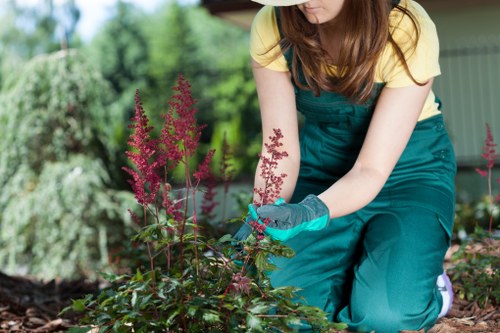
Choosing a local team for crown thinning in Blackfriars is valuable because this area presents a very specific set of working conditions. Access can be tight, parking can be difficult, and many properties sit within busy mixed-use streets where timing and coordination are important. Trees may be surrounded by paving, boundary walls, railings, basement lightwells, or elevated terraces that require careful handling.
Blackfriars also has a mix of old and new building types, which means tree work must often be adapted to the context. A tree beside a modern apartment block may need a different pruning approach from one in a period property garden or near a commercial frontage. A local tree care team understands that one-size-fits-all methods are not appropriate in such a varied environment.
Because the area is close to major routes and well-used pedestrian spaces, customers also benefit from a crew that works efficiently and respects the surroundings. This is especially helpful where a project involves shared access, managed estates, or properties that need coordination with building staff, residents, or maintenance schedules.
Why choose a local tree company
Working with a local company for crown thinning brings several practical advantages. First, a local team is more likely to understand the specific conditions of central London properties, including limited access, restricted loading, and the need to minimise disruption. They are also more likely to know how to adapt work to the kinds of trees commonly seen in the area.
Local knowledge matters because it affects planning as much as pruning. If equipment needs to be brought through narrow access, if waste needs to be removed promptly, or if the work has to be completed around tenants or business hours, the team needs to be organised. That level of practicality can make the whole process smoother for the customer.
It also helps to have a team that can discuss the tree in relation to nearby streets and properties such as Blackfriars Road, Queen Victoria Street, the riverside approaches, and the surrounding central London neighbourhoods. You do not want a generic service that treats every site the same. You want a local solution that suits the tree, the building, and the people who use the space.
Residential customers
Homeowners and residents often request crown thinning when a tree in the garden, shared courtyard, or communal space has become too dense. Common concerns include loss of light, heavy shade on windows, blocked views, and branches brushing against roofs or adjacent structures. For flats and managed developments, thinning can also help reduce ongoing complaints and improve the usability of shared outdoor areas.
For residential customers, the main priorities are usually comfort, appearance, and careful cleanup. The work should be tidy, respectful, and planned around the property’s access limitations. If you live in a terrace, apartment, or mansion block near Blackfriars, you may appreciate a team that can work quietly, safely, and with minimal disturbance.
Commercial customers
Commercial properties often need tree work for practical and presentation reasons. An overgrown crown can reduce daylight inside office spaces, create excessive shade around entrances, or make an exterior feel untidy and cramped. In hospitality or retail settings, a well-managed tree can support a more welcoming environment while still keeping the landscape attractive.
For business customers, timing and coordination are especially important. Work may need to happen outside peak hours, around deliveries, or in a way that avoids affecting staff and visitors. A local team familiar with Blackfriars can usually plan a pruning job with those realities in mind.
What to check before booking
Before arranging crown thinning, it helps to think about the tree and the outcome you want. This makes the initial conversation more useful and helps the work be planned correctly. If you can describe the issue clearly, the team can advise on whether thinning is the right method and how much pruning is likely to be appropriate.
A useful preparation checklist:
- Note where the tree is causing problems: light, shade, density, wind, or clearance
- Check whether the tree is in a garden, courtyard, communal area, or frontage
- Consider nearby windows, roofs, walls, fences, or paved surfaces
- Think about access for equipment and removal of branches
- Identify any timing concerns for residents, tenants, or business operations
It is also sensible to mention if the tree has recently been damaged, shows signs of stress, or has dead branches. That does not necessarily rule out thinning, but it helps the team decide whether additional care or a different approach is needed.
Pricing factors
Customers often want to know what affects the cost of crown thinning, even if they are not expecting a fixed price without an inspection. The honest answer is that several factors influence the amount of work involved. Tree size, species, condition, access, location, and the volume of material to be removed all play a part.
A small ornamental tree in a straightforward garden setting will generally be simpler than a large mature tree in a confined Blackfriars courtyard with limited access and delicate surroundings. If the team needs extra time to manage access, protect surfaces, or work carefully around structures, that will affect the scale of the job. Likewise, a tree that requires additional deadwood removal or more detailed shaping may involve more time than a light thin.
Common pricing factors include:
- Tree height and spread
- Density of the crown
- Species and structural complexity
- Access for equipment and waste removal
- Whether the work is residential or commercial
- Additional pruning, cleanup, or site protection needs
If you are comparing options, ask for a clear explanation of what is included so you can judge value properly. The cheapest option is not always the best, especially when the tree is close to a building or in a busy shared space.
Tree health, safety, and appearance
Well-executed crown thinning should support tree health rather than weaken it. Removing selected branches can reduce congestion, improve airflow, and lower the chance of weak internal rubbing. It can also help the tree distribute light more evenly through the crown, which may support healthier foliage in the remaining branches.
Safety is another important reason customers request this service. A tree with too much mass in the crown can create more load in windy conditions, especially in exposed or elevated locations. While thinning is not a cure-all for structural issues, it can be part of a sensible maintenance plan that makes the tree more suitable for its surroundings.
Appearance matters too. Many customers in Blackfriars want their trees to look cared for, not overcut. A thoughtful thinning job preserves the form of the tree while making it feel lighter and more elegant. That is one reason why selective pruning is so often preferred over more drastic work.
How a proper finish should look
A good result should feel natural. You should still be able to recognise the tree’s original shape, but with less density and improved spacing between branches. The crown should look balanced, not patchy or uneven, and the tree should still contribute positively to the property’s appearance.
Maintenance and aftercare
After crown thinning, most trees benefit from periodic observation rather than immediate further work. The exact interval depends on species, growth rate, and how heavily the tree was carrying its canopy before pruning. In a busy area like Blackfriars, many trees grow in response to light competition and built-up surroundings, so they can gradually thicken again over time.
Customers are often advised to keep an eye on new growth, any signs of stress, and whether the original problem starts to return. If the tree was thinned to improve light to a room or courtyard, it is worth checking whether the effect remains comfortable through the seasons. A local team can recommend a practical maintenance rhythm based on the tree’s behaviour and the property’s needs.
Aftercare is usually straightforward: avoid unnecessary disturbance around the root area, continue normal watering where appropriate for younger or recently stressed trees, and keep an eye on any changes in branch movement or leaf density. If you are unsure, arrange a follow-up assessment rather than waiting until the tree becomes difficult again.
Areas covered around Blackfriars
Customers in and around Blackfriars often need tree work that spans nearby commercial and residential pockets. A local service is useful not just in Blackfriars itself, but also in surrounding central London areas where access and property types create similar challenges. This can include riverside apartments, office terraces, compact gardens, courtyard trees, and managed communal spaces.
People typically request crown thinning from nearby districts and routes where trees sit close to buildings and hard landscaping. Depending on the job and access, service may also be relevant for properties around Southwark, Temple, the City fringe, Holborn, Bankside, and adjacent central London locations. The key point is not the postcode alone, but the kind of setting: urban, close-set, and in need of careful, tidy work.
If your property is near busy roads, a station approach, a riverside walkway, or a shared estate, a local team can plan around the realities of the site. That means better scheduling, smarter waste handling, and less disruption for residents, employees, or visitors.
Frequently asked questions
Is crown thinning the same as reducing the size of a tree?
No. Thinning focuses on selectively removing branches throughout the crown while keeping the tree’s overall size and outline broadly the same. Reduction work, by contrast, is used when a tree needs to be made smaller. If your main issue is density rather than height or spread, thinning may be the better choice.
Will the tree look bare afterwards?
It should not. A properly carried out thin should leave the tree looking lighter and more open, but still natural and full. The goal is balance, not a stripped-back appearance. If a tree looks bare, too much may have been removed.
Can crown thinning help with too much shade?
Yes, in many cases it can make a meaningful difference. By opening up the canopy, more daylight can pass through to nearby windows, patios, and garden spaces. The degree of change depends on the tree’s size, species, and density.
Is it suitable for mature trees?
Often, yes. Mature trees commonly benefit from thoughtful thinning, especially in confined urban spaces. However, the work must be proportionate and based on the tree’s condition. A mature tree that is already stressed or structurally compromised may need a different approach.
Do I need permission for tree work?
Some trees may be protected or covered by local controls, and properties in managed areas may have their own rules. If you are unsure, ask for an assessment before booking. A responsible tree care team will tell you if any checks are needed before work begins.
Why customers book crown thinning early
One of the most common mistakes property owners make is waiting until a tree becomes a serious nuisance before arranging work. By the time a canopy is extremely dense, the area beneath it may already feel dark, damp, or cramped. Branches may also have grown closer to roofs, windows, and neighbouring boundaries than is ideal.
Booking early often leads to a better outcome because the pruning can be more measured and less reactive. In a place like Blackfriars, where outdoor space is valuable and building relationships matter, small maintenance decisions can prevent larger problems later. It is usually easier to improve a tree’s form gradually than to fix a badly neglected canopy in one go.
If you have noticed increased shade, poor airflow, or a tree that feels too heavy for its setting, it may be time to act. Contact us today to request a free quote and discuss whether crown thinning is the right solution for your property.
Choosing the right service for your tree
Every tree and every site is different. A good crown thinning service should not start with assumptions; it should start with the tree itself. The best results come from understanding species, size, structure, location, and your goals as the property owner or manager. If the aim is to keep a tree healthy while improving light and reducing density, a selective, carefully planned approach is essential.
For Blackfriars customers, the real value of a local service is practical support. You want someone who understands how to work around urban constraints, who can respect shared spaces, and who knows how to make a tree look better without making it look overworked. That combination of skill and local awareness is what makes the service useful.
Book your service now if you are ready to improve the shape, airflow, and light levels around your tree. Whether the work is for a home, courtyard, office frontage, or managed property, a well-executed crown thinning job can make a lasting difference to how the space feels and functions.
Final thought
Crown thinning in Blackfriars is about more than pruning branches. It is about making trees work better in a compact urban environment while keeping them attractive, healthy-looking, and suited to the people who live and work around them. If your tree has become too dense for its setting, a local team can help you choose the right approach and carry out the work with care.
Contact us today to request a free quote and take the next step toward a lighter, healthier, better-balanced tree.